
Sri Lanka doesn't ease you in gently. From the moment you land, the island hits you with colour, scent, and sound all at once — tuk-tuks weaving through jasmine sellers, the distant echo of temple bells, the smell of cinnamon drifting from a roadside stall. For couples looking for a honeymoon that's equal parts romantic and adventurous, this teardrop island packs in more than most destinations twice its size.
This five-day itinerary is built for two — starting and ending in Colombo, covering the Cultural Triangle, the misty hills of the central highlands, and finally the golden south coast. It mixes the iconic landmarks with a handful of places you won't find on a standard tourist map.
Route at a Glance
Colombo → Sigiriya → Kandy → Ella → Mirissa → Colombo
(Day 01) Colombo — First Impressions & Colonial Echoes
Arrive · Explore Fort & Pettah · Sunset at Galle Face · Dinner in Colombo 07
Most international flights land at Bandaranaike International Airport in Negombo, about 35 km north of Colombo. Pre-book an airport transfer (around LKR 3,000–4,500) to avoid the taxi queue scramble. Check into your hotel, freshen up, and resist the urge to nap — Colombo rewards those who explore it immediately.
Start in the Fort district, Sri Lanka's commercial heartland. Walk past the Old Colombo Lighthouse, the white-colonnaded General Post Office, and the red-brick Dutch Hospital Shopping Precinct — now home to some of the city's best cafes and restaurants. It's a good spot for a light lunch; try Ministry of Crab if you're willing to splurge, or grab a kottu roti from one of the street stalls nearby for a more authentic, budget-friendly introduction to local food.
From Fort, head east into Pettah — the city's chaotic, wonderful bazaar neighbourhood. Each street here specialises in something different: one sells only fabrics, another only spices, another electronics. Walk through without a shopping agenda and you'll enjoy it far more. The Jami Ul-Alfar Mosque, striped red and white like a giant candy cane, is one of Colombo's most photographed buildings and is worth ducking into if it's not prayer time.
Most visitors skip Slave Island (Kompanna Veediya), but it's one of Colombo's most culturally layered neighbourhoods. The Sri Subramaniya Swami Kovil here is a Hindu temple of extraordinary colour, and the area around Beira Lake — especially in the late afternoon — is genuinely quiet and beautiful compared to the tourist buzz of Galle Face.
For sunset, head to Galle Face Green — a long, breezy oceanfront promenade where Colombo families gather in the evenings. Buy a bag of isso wade (prawn fritters) from the roadside vendors, sit on the grass facing the Indian Ocean, and let the salt air properly welcome you to the island.
Dinner: Head to Colombo 07 (Cinnamon Gardens) for the evening. Nuga Gama at Cinnamon Grand is a brilliant mid-range splurge — a recreated village in the hotel gardens where you eat traditional Sri Lankan food by oil lamp. Romantic, affordable by hotel standards, and genuinely memorable.
(Day 02) Sigiriya — The Rock Fortress at the Centre of the World
Early departure · Sigiriya Rock · Pidurangala at sunset · Night in Sigiriya village
Leave Colombo by 6am. The drive to Sigiriya is roughly four hours through the dry zone — flat at first, then gradually more forested, with roadside toddy tappers and the occasional elephant crossing. A private driver is worth every rupee here; trains don't reach Sigiriya and public bus connections are complicated for a timed visit.
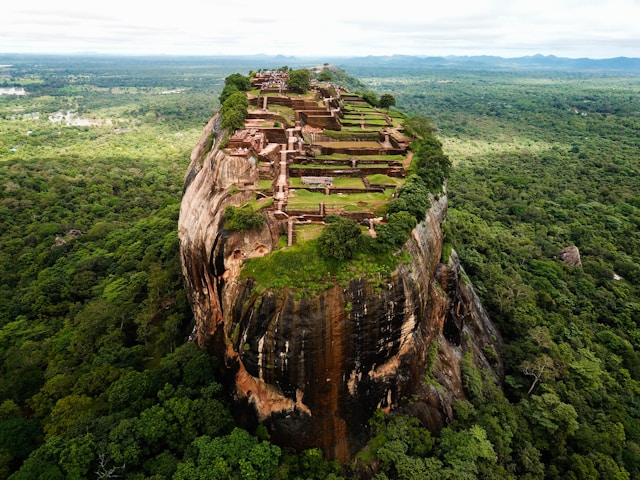
Sigiriya Rock Fortress needs little introduction — a 5th-century citadel built atop a 200-metre volcanic plug by King Kashyapa, it's one of the most dramatic archaeological sites in South Asia. Arrive before 8am. By 9:30, tour groups arrive and the queues for the narrow spiral staircases become genuinely unpleasant. Early morning also means the light hits the rock face at an angle that makes everything look surreal.
The climb takes about 45–90 minutes depending on your pace. On the way up, don't miss the famous Sigiriya frescoes painted ladies preserved in a sheltered rock overhang that have survived 1,500 years of monsoons. Near the summit, the Mirror Wall (once polished smooth enough for the king to see his reflection) is covered in ancient graffiti left by visitors as far back as the 7th century. The summit reveals the ruins of the royal palace and a 360-degree view of the surrounding jungle, tanks, and paddy fields that's unlike anything else you'll see on this trip.
Most tourists pay the $30 Sigiriya entry fee and head home satisfied. But Pidurangala Rock, a 20-minute drive away and costing a fraction of the entrance fee, gives you the best possible view of Sigiriya itself. The hike is steeper and less polished — you'll scramble over giant boulders past a reclining Buddha carved directly into the rock — but the reward at the top is a direct sightline to Sigiriya at golden hour that almost no one gets. Go up about an hour before sunset.
For lunch, skip the tourist restaurants near the Sigiriya entrance and instead ask your driver to take you to a local rice and curry place in the nearby town of Inamaluwa. A full meal — rice, four or five curries, papadam, a lentil soup — will cost less than $3 per person and taste considerably better than anything packaged for tourists.
Stay overnight in a small lodge or guesthouse near Sigiriya. Several family-run places on the outskirts of the village have simple, clean rooms with garden views and excellent home-cooked dinners. This is the "budget" part of the trip — save the splurge for Ella and Mirissa.
(Day 03) Kandy — Temple City in the Hills
Dambulla Cave Temples · Drive to Kandy · Temple of the Tooth · Kandyan dance show
On the way from Sigiriya to Kandy, stop at the Dambulla Cave Temple — a UNESCO World Heritage site that rarely gets the attention it deserves. Five natural caves are filled with over 150 Buddha statues and ceiling murals painted across 2,100 square metres of rock. It sounds like a museum description; in person, it feels more like stumbling into a dream. Leave your shoes at the bottom (the rock gets hot — go early), and take your time in each cave. Budget around two hours.
From Dambulla, Kandy is about 70 kilometres — the road rises through rubber and spice plantations, and the air noticeably cools as you gain altitude. Kandy sits at 500 metres above sea level in a valley surrounding an artificial lake built by the last Kandyan king. It has a more relaxed pace than Colombo, and its restaurants and cafes are substantially better than what you'd expect for a city this size.
The Sri Dalada Maligawa
The Temple of the Sacred Tooth Relic — is Kandy's defining landmark and one of the most important Buddhist shrines in the world. It reportedly holds a tooth of the Buddha, brought to Sri Lanka in the 4th century. Entry is around LKR 1,500. Dress respectfully (sarongs available for hire at the entrance), and if you time it right, the evening puja (offering ceremony) at 6:30pm involves drumming, chanting, and smoke that rises through the golden chambers in a way that stays with you.
Udawatta Kele Sanctuary
Right behind the Temple of the Tooth, most visitors walk straight past the entrance to Udawatta Kele — a dense forest reserve that was once the private pleasure garden of Kandyan royalty. Trails wind through tall trees draped in moss and ferns, passing small forest hermitages where monks still meditate in near silence. The birds here are extraordinary. Entry is cheap, the trails are easy, and you will almost certainly have the place to yourselves.
In the evening, catch a Kandyan cultural show — there are several near the lake that run nightly, featuring traditional dance, fire-walking, and the iconic Kandyan drum performance. It's a little touristy, yes, but it's also one of the best ways to understand a performance tradition that's been part of Sri Lankan culture for centuries.
.jpg)
(Day 04) Ella — Train Rides, Tea & Two-Person Sunrises
The world's most scenic train ride · Nine Arch Bridge · Little Adam's Peak · Ella town
The Kandy to Ella train is frequently listed among the most beautiful rail journeys on earth, and it earns the claim. The six-hour ride winds through the central highlands — past tea estates that carpet entire hillsides in vivid green, through tunnels drilled into the mountains, over iron bridges above valleys filled with mist. The best seats are on the right side of the train heading from Kandy to Ella. Book second-class seats in advance through an agent (avoid the reservation queues); or if they're sold out, stand at the open carriage doors for stretches — it's where the best photos happen anyway.
Depart Kandy on the morning train. The journey passes through Nuwara Eliya — Sri Lanka's hill station, nicknamed "Little England" for its colonial bungalows and cool climate — and the views from here are some of the best on the route. Arrive in Ella by early afternoon.
Ravana Falls is on every tourist map and is deservedly beautiful. What isn't on the map is the trail that goes above the main waterfall to a second tier of cascades and a natural pool that sees almost no visitors. Ask locally for directions — it takes about 25 minutes of hiking — and you'll find yourselves swimming in a mountain pool surrounded by jungle with the falls crashing below. Go in the afternoon when the light hits the water directly.
After settling in, walk to the Nine Arch Bridge — a colonial-era viaduct built entirely without steel, using brick and cement, that arches through the jungle. If you time it right, the train passes across it roughly every two hours. The light is best late afternoon. The viewpoint above the bridge (not the standard tourist spot below) gives you a cleaner angle and almost no one goes there.
Set an alarm for 5:30am. The sunrise from Little Adam's Peak — a two-kilometre walk from Ella town along a gentle trail through tea estates — is one of the most quietly romantic things you can do on this island. The trail is easy enough to do by phone torch; you'll arrive at the top as the sky turns pink behind the hills. Bring a jacket — it gets cold up there before dawn.
Ella's small strip of restaurants and cafes punches well above its weight. For dinner, try the rooftop at 98 Acres resort if you're splurging, or one of the small rice and curry spots on the main road for something unpretentious and genuinely excellent.
(Day 05) Mirissa & the Road Home — Whales, Waves & a Last Slow Lunch
Whale watching at dawn · Mirissa beach · Drive back to Colombo via the coast road
From Ella, the drive south to Mirissa takes about three hours through the dry zone — the landscape shifts dramatically, the air thickens, and coconut palms replace the tea bushes. Arrive the night before (Day 4 evening) if your schedule allows, to catch the whale watching boats that depart at 6:30am.
The waters off Mirissa are one of the most reliable places in the world to see blue whales — the largest animals ever to have lived on Earth. The boats go out about 15–20 kilometres into the deep water channel, and sightings happen on the vast majority of trips between November and April. Bring sea sickness tablets if you're susceptible, and leave your breakfast light. When a blue whale surfaces — which can be 25 metres long and loud enough that you hear the breath before you see the animal — the boat goes very quiet.
Mirissa's main beach gets busy by mid-morning. Walk west past the rocky headland (accessible at low tide) and you reach a smaller cove that locals call Secret Beach — calm water, shade from coconut palms, and rarely more than a handful of people. There's a small bar here that serves king coconuts cracked open in front of you. Spend an afternoon here and you'll understand why people miss their flights.
After the beach, lunch somewhere unhurried. The Mirissa strip has improved enormously — there are now several places doing good seafood grilled to order. Ask what came in that morning; the seer fish (wahoo) grilled with garlic and lemon is one of the best meals Sri Lanka will offer you.
The drive back to Colombo along the Southern Expressway takes around two and a half hours — Sri Lanka's only proper motorway, fast and smooth. If time allows, stop briefly in Galle on the way: the Dutch fort, a UNESCO site, is worth an hour of walking the ramparts above the ocean, especially late afternoon. It's the kind of place that makes you immediately start planning a return trip with more time.
Arrive back in Colombo with enough time for a final dinner in the city — try a rooftop restaurant in the Fort area, where the old colonial buildings are lit up at night and the harbour glitters below. Five days is not enough for Sri Lanka. It never is. But you'll leave knowing you saw the real thing.
Before You Go
Getting around
For a five-day itinerary covering this much ground, hiring a private driver for the whole trip is the single best decision you can make. Expect to pay around $50–70 per day including fuel. Your driver doubles as a local guide, negotiates on your behalf, and makes every connection seamless. Book through your accommodation or a trusted local agency — ask for recommendations in Sri Lanka travel forums beforehand.
Money
Sri Lanka uses the Lankan Rupee. ATMs are reliable in cities and tourist areas but scarce in rural spots. Carry a mix of cash and a card. USD is accepted at larger hotels and for entry fees at major sites. Tipping is expected and appreciated — LKR 200–500 for meals, more for exceptional service.
Food safety
Stick to cooked food from busy stalls and restaurants with good turnover. Avoid raw salads at places that don't look fastidious, and drink bottled water everywhere. With those two rules, you're unlikely to have any trouble.
Respect & etiquette
Sri Lanka is a deeply religious country. Remove shoes before entering any temple or home. Don't pose with your back to Buddha statues for photographs — it's considered disrespectful and can cause genuine offence. Dress modestly at religious sites; both partners should cover shoulders and knees. A light scarf or sarong packed in your day bag solves this everywhere.
Visa- ETA online before arrival (~$20)
SIM card- Dialog or Hutch at airport — get it immediately
Train tickets- Book Kandy–Ella at least 3 weeks ahead
Currency- LKR — carry small bills for temples & markets
Comments
0